
What Does a Pediatric Occupational Therapist Do?
Pediatric occupational therapists help children develop the essential skills needed to participate in meaningful childhood activities, including play, learning, social interactions, and self-care. Through individualized, play-based interventions, we support each child’s unique developmental needs while promoting independence, confidence, and success in everyday life.
Building Skills for Everyday Life
A child’s primary occupations include playing, learning, exploring, and participating in daily routines. Pediatric occupational therapy supports the development of essential skills that allow children to engage in these meaningful activities with greater confidence and independence.
Our occupational therapists help children with:
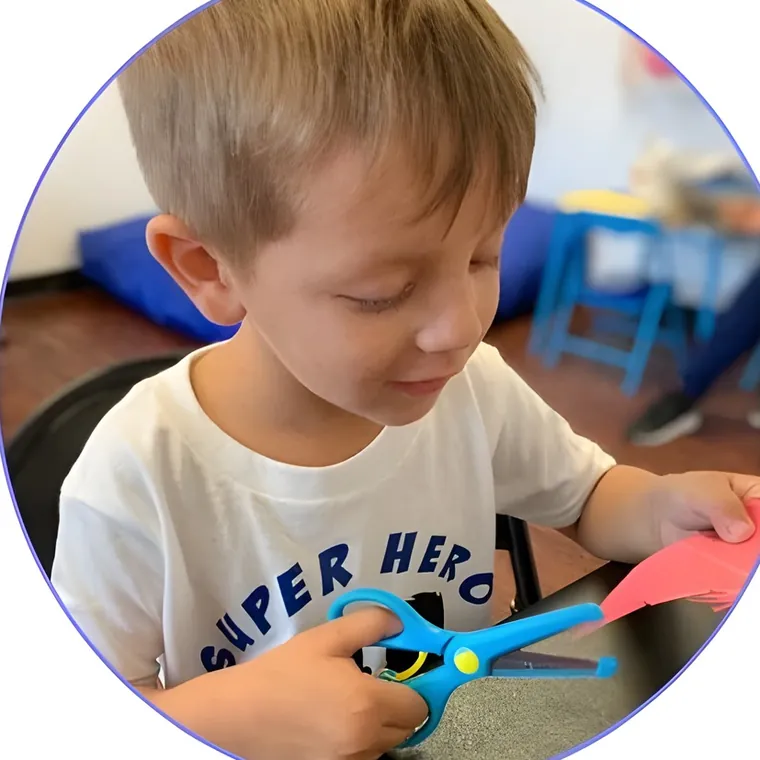
- Fine motor skills, including pencil grasp, handwriting, cutting, and managing buttons and zippers.
- Gross motor skills, including balance, coordination, body awareness, and motor planning.
- Daily living skills, including dressing, grooming, toileting, and self-feeding.
- Sensory processing and self-regulation, supporting each child’s unique sensory preferences and needs.
- Attention and engagement in play, learning, and everyday activities.
The Benefits of a Sensory Gym
Our sensory gym provides a safe, supportive, and engaging environment where children can explore movement and sensory experiences through purposeful play. Specialized therapeutic equipment, such as swings, trampolines, and crash pads, allows our occupational therapists to address sensory processing, body awareness, motor planning, coordination, and self-regulation.
Each activity is intentionally selected to support the child’s individual sensory and developmental needs while making therapy fun and meaningful.
Signs Your Child May Benefit from Occupational Therapy
- Experiences difficulty with drawing, coloring, handwriting, or using scissors.
- Experiences discomfort or distress with certain sounds, textures, clothing, or sensory experiences.
- Has difficulty with balance, coordination, or motor planning.
- Seeks additional movement or sensory input throughout the day.
- Experiences difficulty maintaining attention and engagement during learning or daily activities.
- Requires additional support with age-appropriate self-care skills, such as dressing, grooming, or toileting.
- Experiences challenges with self-regulation or transitioning between activities.
Every child develops at their own pace. If you have concerns about your child’s development or participation in everyday activities, our occupational therapists can help identify their strengths and areas where additional support may be beneficial.
Ready when you are.
Contact our office or start online. Our team will guide you through every step.