Late Talkers
Every child develops at their own pace. A speech and language evaluation can help families understand their child’s communication strengths and needs.

When to Seek Support for Your Late Talker
While every child develops at their own pace, a speech and language evaluation may be beneficial if your child:
- Demonstrates limited or no babbling by approximately 12 months.
- Has not begun using meaningful single words by approximately 18 months.
- Is not yet combining two words by approximately 24 months.
- Communicates primarily through gestures, pointing, or vocalizations, with limited spoken language.
- Experiences frustration when communicating their wants, needs, or ideas.
- Has lost previously acquired speech or language skills.
Early support can help families better understand their child’s communication strengths and needs while providing individualized strategies to encourage meaningful communication and language development.
If you have concerns about your child’s communication development, we encourage you to reach out to our team. You do not need to wait until your child reaches a specific age to seek professional guidance. If your child loses previously acquired skills, contact their pediatrician promptly.
What to Expect During Speech Therapy
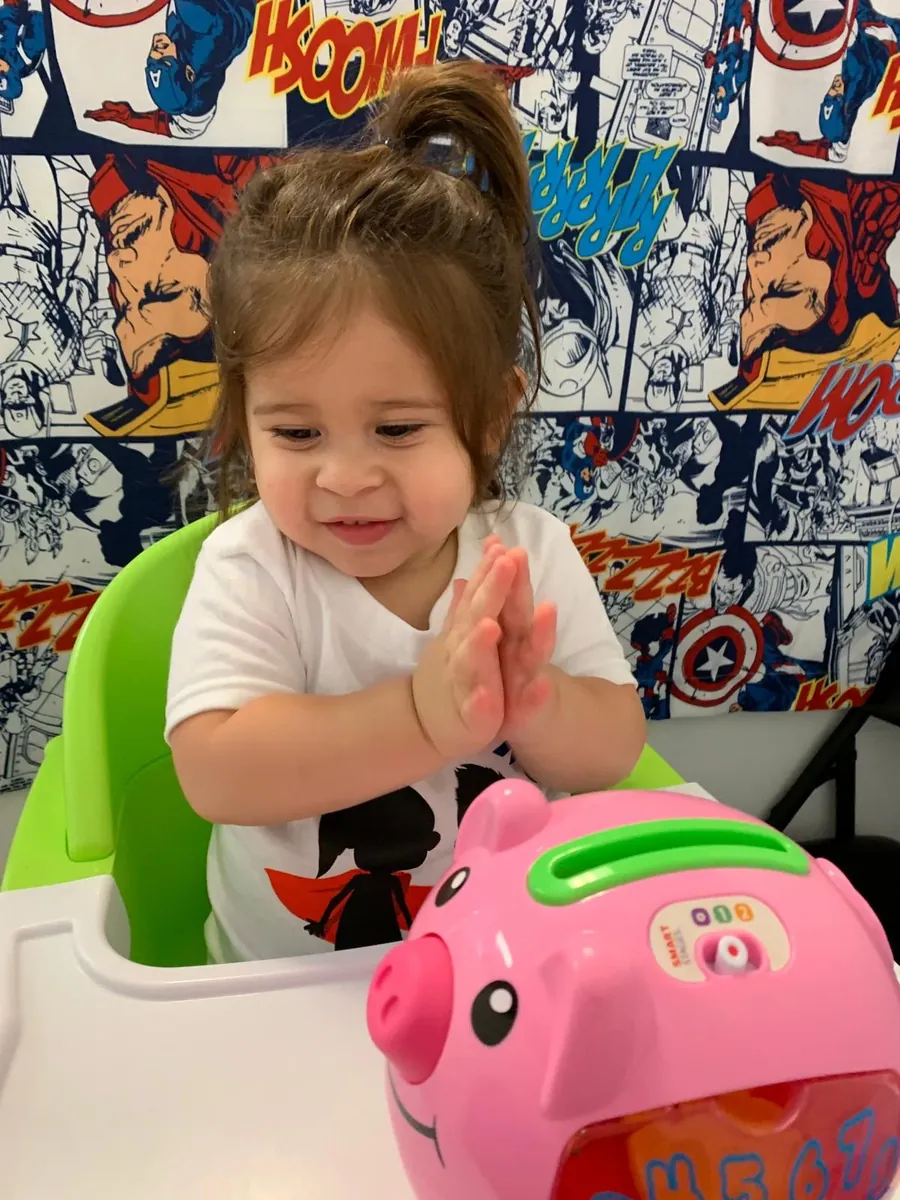
Our speech and language therapy sessions are individualized, play-based, and designed around each child’s interests, strengths, and communication needs. We focus on developing an understanding of language and its purpose while creating meaningful opportunities for children to communicate, connect, and express themselves.
Our therapy sessions may focus on:
- Developing receptive language skills and understanding everyday communication.
- Understanding the purpose of communication and how it can be used to interact with others.
- Expressing wants, needs, thoughts, feelings, and preferences.
- Supporting multimodal communication through gestures, signs, pictures, augmentative and alternative communication (AAC), and spoken language.
- Expanding expressive language, vocabulary, and meaningful language combinations.
- Promoting communication initiation, shared engagement, and social connection.
- Providing parents and caregivers with practical strategies to support language development throughout everyday routines.
We recognize and value all forms of communication. Our goal is to empower each child to communicate effectively, confidently, and authentically in ways that are meaningful to them.
Common Myths About Early Language Development
Myth:Boys naturally talk later than girls.
Fact:Every child develops at their own pace, regardless of gender. Concerns about speech and language development should be addressed early rather than attributed to gender differences.
Myth:You should wait until your child is three years old before seeking speech therapy.
Fact:Early intervention can provide meaningful support for communication and language development. Families do not need to wait until a specific age to seek professional guidance.
Myth:Learning multiple languages causes speech and language delays.
Fact:Bilingualism and multilingualism do not cause speech or language delays. Children can successfully develop communication skills in multiple languages, and families are encouraged to continue using the languages that are meaningful to them.
Myth:Using Augmentative and Alternative Communication (AAC) limits language development or prevents children from learning to speak.
Fact:AAC does not prevent or delay spoken language development. In fact, AAC can support and enhance language development, expand vocabulary, reduce communication frustration, and promote meaningful interactions. AAC empowers children to express their thoughts, wants, needs, and preferences while supporting all forms of communication.
Services That Support This
Ready when you are.
Contact our office or start online. Our team will guide you through every step.